The Afternoon Shutdown: A Survivor's Guide to Liguria's 3 P.M. Dead Zone
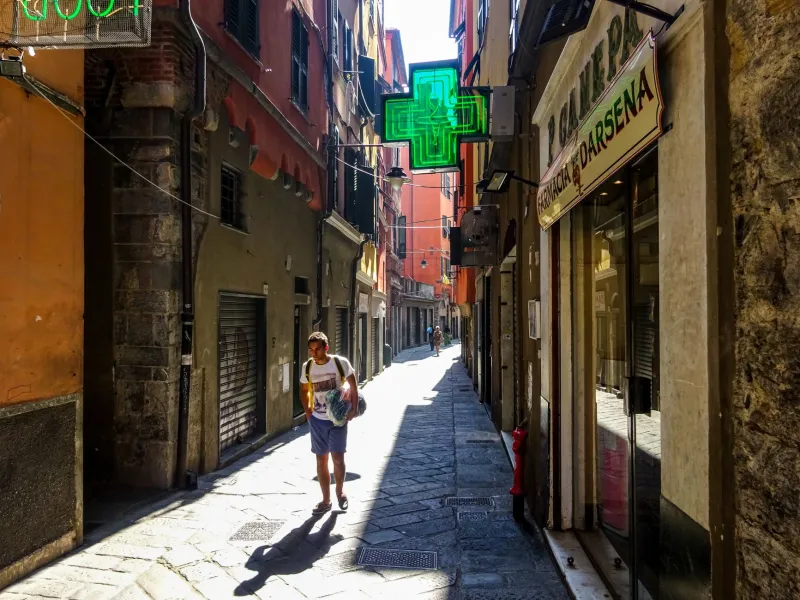
At 3 p.m. in a Ligurian village, you may feel as if you have missed a memo. The bakery is shuttered. The pharmacy is dark. The hardware store is locked. A cat owns the sidewalk. You wanted a coffee, a museum, and a new beach towel. What you have found is riposo.
This is not a personal rejection. It is not a sign that the town has given up. It is a daily pause, built into the local clock. Shops close, kitchens rest, and the afternoon belongs to lunch, shade, and the small business of doing nothing. For a visitor on an American schedule, it can feel like a plot. For a Ligurian, it is just Tuesday.
First, stop fighting the clock
The worst thing you can do at 3 p.m. is rattle a shutter and ask why. The second worst thing is to march from door to door with the energy of someone who has never been told no. The town is not closed because it is lazy. It is closed because the day has a shape, and this is the soft middle of it.
Think of riposo as a local skill rather than an inconvenience. You do not have to master it immediately. You just have to stop treating it as a problem to beat. The shops will open again. The kitchens will fire up again. The evening will come. In the meantime, your job is to find a comfortable place to wait.
What is actually open
Not everything vanishes. Bars often stay open, especially in towns with tourists. This is your friend. A bar is not just for alcohol. It is for espresso, water, a cold drink, and a place to stand while you reconsider your plan. Focaccerie may sell by the slice through the afternoon. Gelaterie often stay open. Tabacchi sell bus tickets, water, and sometimes a few useful sundries. In larger towns, supermarkets may keep going. Churches are usually open, though you should be quiet and respectful. The beach, of course, does not close. Neither does the promenade.
The trick is to lower your expectations in the right way. Do not look for a full meal at 3 p.m. Do not expect a pharmacist to be there. Do not assume a museum will be open just because the sign says it exists. Check first. Then let the afternoon be smaller than you planned.
The focaccia loophole
Focaccia is the great afternoon solution. A slice of it, warm or at room temperature, with a little salt and olive oil, can carry you from lunch to dinner without turning the afternoon into a crisis. In Liguria, this is not a compromise. It is a local institution. Find a focacceria that is open, order by the piece, and eat it standing up or on a bench. If you see farinata, the chickpea flatbread, try that too. It is the kind of food that understands a strange hour.
This is also the moment to remember that lunch is not a minor event here. If you ate a proper lunch at 12:30 or 1, you may not even be hungry at 3. That is fine. You are not supposed to be. The afternoon pause is not a test of your stamina. It is a gap between meals, and the gap has its own pleasures.
Build your day around riposo
A better strategy is to stop planning an American day in an Italian town. Eat lunch as your main meal. Do it a little later than you would at home, but not so late that you are fighting the kitchen. Then let the afternoon go soft. Swim. Read. Nap. Walk the alleys in the shade. Sit on a bench and watch the town do very little. Save your museum visit for the morning or the late afternoon. Save your shopping for after 4. Save your appetite for dinner.
This is not a wasted afternoon. It is the afternoon the locals have been taking for generations. You are not missing Liguria. You are seeing a part of it that tourists with tight schedules usually skip.
The bar stool strategy
When in doubt, find a bar. Not a restaurant with a full menu, but a bar. Stand at the counter. Order an espresso or a glass of water. If you want something cold, ask for it. Do not expect table service at all hours. Do not expect a long discussion of the menu. The bar is a small refuge, and the person behind it has seen a hundred travelers in your exact state of confusion.
If you are hungry, ask whether there is focaccia or a simple panino. If the answer is no, finish your drink and move on. The point is not to solve the afternoon in one stop. The point is to give yourself a place to land.
What not to do at 3 p.m.
Do not schedule a full meal. Do not assume the pharmacy is open. Do not plan a hike in the full sun without water. Do not stand in the middle of the alley looking at your phone with the expression of a lost hiker. Do not ask a shopkeeper to open early. Do not treat the closed shutters as a personal insult.
Also, do not confuse riposo with a national emergency. The town will wake up. The evening will be lovely. You will get your coffee, your towel, and your dinner. You just have to wait longer than your appetite expected.
The reward: dinner, eventually
Around 4 or 4:30, the shutters begin to lift. The streets fill again. The light turns gold. By 6 or 6:30, it is aperitivo time. By 8, the restaurants are humming. Dinner is not early here, and that is the point. The long afternoon has made room for it.
So when 3 p.m. comes and everything is closed, do not panic. Find a bar stool, a slice of focaccia, or a patch of shade. Let the town take its pause. You are not stranded. You are learning the local skill of waiting, and the evening is still ahead.