Week Three, and the Fish Guy Knows My Name: Confessions of a Market Convert
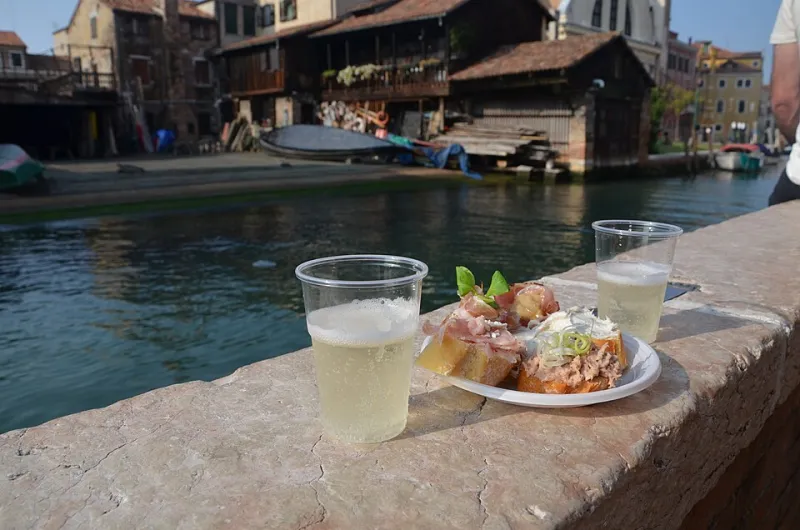
Photo: Monika Ďuríčková [1], CC BY 2.0, via Wikimedia Commons
I had a plan when I landed in Liguria for a month-long stay: find the biggest supermarket, load up a cart every Sunday, and eat cheap. Very American of me. Back home in Chicago, my grocery life is a single expedition—costco-size haul, trunk full of plastic, fridge packed like a carry-on.
By the second week, that plan was dead. Killed, gently, by a woman selling peaches.
The Peach Lady Problem
The Tuesday market in our bay town sets up along the seafront around 7 a.m., white canopies catching the early light, vans backing in with crates still cold from the fields. I wandered in expecting to grab produce for the week. Instead, the peach vendor asked where I was staying, heard "the apartment above the bakery," and told me her peaches from the flatlands near Albenga would be perfect "by Thursday, not today." Then she refused to sell me any.
I came home with zucchini, a chicken, and a lesson: this isn't shopping. It's a relationship with a schedule you don't control.
Why the Big Shop Doesn't Work Here
Part of it is practical. Refrigerator space in Italian rentals is a cruel joke—your fridge is roughly the size of a hotel minibar, and the freezer is a rumor. You can't buy for a week. But mostly it's that the market operates on a different clock. Fish is best the day it's caught. Bread is best the morning it's baked. The whole economy runs on small, frequent, fresh.
Once I surrendered to that, something unexpected happened. The errand I'd dreaded became the anchor of my week.
The Rules Nobody Hands You
Nobody hands you a pamphlet at the fish stall, so here's the unofficial guide I earned the slow way.
Go early or don't bother. The market peaks between 7:30 and 10. By noon, the good tomatoes are gone and the vendors are packing up. Americans used to 24-hour everything find this genuinely hard to accept. Accept it.
Let them pick. At home, I paw through every apple like I'm screening candidates. Here, reaching into the tomato pile yourself is mildly insulting—like telling a barber you'll do the back yourself. Point, say how many, let them choose. They've been doing this for decades. Their tomato radar is better than yours.
At the fish stall, know your two questions. "Che cosa consigliate oggi?" (what do you recommend today?) will get you further than any attempt to identify a fish from a distance. Then ask how they'd cook it. They will tell you. They will be right.
Don't haggle over food. This isn't a bazaar. Prices are the prices. The only acceptable "negotiation" is letting the vendor add something extra to your bag because they like you—which happens, but only on their terms.
A bag, always. Bring your own. The plastic bags at the stalls are for wrapping, not hauling. A market tote is the single most useful souvenir you can buy in the first ten minutes of your trip.
Cash, small bills. Some vendors take cards now, but you don't want to be the person holding up the line while the reader connects.
Week Three, the Turn
Here's the part nobody warned me about. Around week three, the fish guy started holding back a piece of something before I arrived—"I kept this for you, I thought maybe tonight." The peach lady saved me the last flat of figs. The cheese man started cutting my pecorino a little thicker than I asked.
This is the actual product the market sells. Not the produce—though, God, the produce. It's being recognized. Back home I can go months without a single transaction involving eye contact. Here, my Tuesday morning involves four conversations before 9 a.m., one of which is conducted entirely in gestures about anchovies.
I've since read that loneliness researchers make a big deal of "weak ties"—the barista, the neighbor, the regulars you nod to. Ligurian markets are weak-tie factories. You get one free with every purchase.
A Mini-Guide for the Market-Curious American
If you're staying anywhere on this coast for more than a few days, try this:
- Find the market day. Most towns have one or two fixed days a week; ask at your guesthouse or look for the white tents the night before.
- Go your first week with no list. Just walk it. Watch what people buy. Notice that nobody's in a hurry.
- Buy one thing you can't name. Ask what it is and how to cook it. This is how I learned to love friarielli and how to make a vendor's entire morning.
- Return to the same stall twice. Week two is where the magic starts. By week three, you're a regular.
- Learn four words: buongiorno, quanto costa, grazie, arrivederci. That's the whole entry fee.
What I Brought Home (That Wasn't Food)
I'm back stateside now, and I've stopped doing the big shop. I go to the farmers market near my apartment twice a week, buy for a day or two at a time, and talk to the same three vendors. It costs a bit more and takes a bit longer, and my fridge looks tragically empty by modern American standards.
But last Saturday, the guy at the mushroom stand had chanterelles set aside. "Thought of you," he said.
Week three came through. It works in Chicago, too.