Nobody's Staring at You: What Liguria Taught Me About Dining Alone
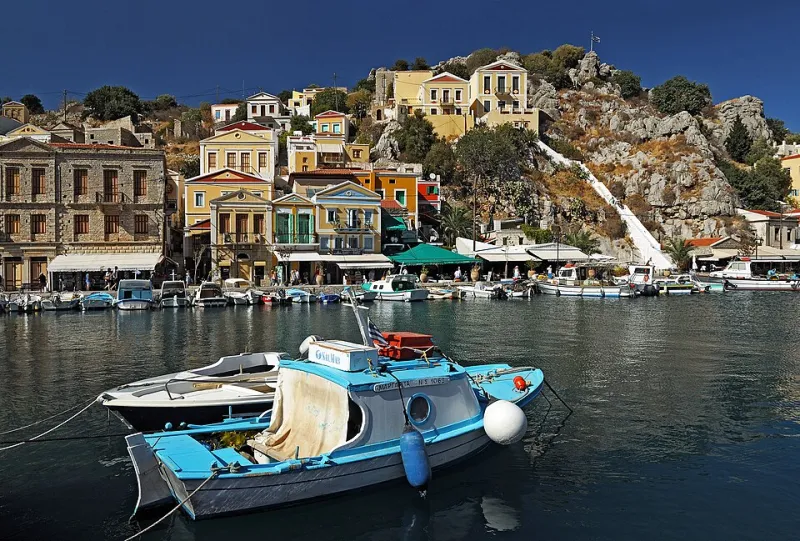
Photo: shankar s. from Dubai, united arab emirates, CC BY 2.0, via Wikimedia Commons
The first time I ate dinner alone in Italy, I did what most Americans do: I brought a book I didn't read, sat at the fastest-correcting table the waiter could find, and ordered the quickest thing on the menu. I was in and out in forty minutes and felt vaguely victorious about it, the way you do when you survive something.
Then I spent a summer on the Ligurian coast and paid attention to how the locals did it. A man in Sestri Levante, maybe seventy, took two hours over lunch for one—a plate of trofie al pesto, half a carafe of white wine, and a newspaper he read like it owed him money. No phone. No book. No apology. He wasn't killing time. He was spending it, deliberately, on himself.
It rearranged something in my head.
We've Made Solo Dining a Shame Spiral
Let's be honest about the American version of eating alone: it's engineered for escape. We default to the bar 'just in case,' scroll our phones like a nervous habit, and treat the whole thing as a logistics problem between work and bed. Surveys keep telling us people feel self-conscious dining solo, which is a strange sentence when you think about it—embarrassed to feed yourself in public.
The unspoken assumption is that a table for one is a table for someone who couldn't find a partner for the evening. It's a deficit. A consolation prize.
The Ligurian assumption is different: the meal is the event. Whether it's two people or one, you sit, you order something worth eating, and you stay until you're done—not until you're uncomfortable.
The Waiter Isn't Pitying You. He's Not Even Thinking About It
Here's what nobody tells you: the thing you fear at a solo dinner—the judgment of the room—doesn't exist. In a trattoria along the bay, servers see solo diners every single day. Office workers on lunch break. Widows and widowers keeping their routines. Travelers, eventually, once they get over themselves.
My turning point came at a tiny place in Recco, famous for its focaccia col formaggio. I sat outside, ordered the local specialty and a glass of the house Vermentino, and made a rule for myself: no phone until the food arrived. By the time the paper-thin, cheese-oozing disc landed in front of me, I was watching a grandmother at the next table teach her grandson how to fold his napkin. I would have missed that. I'd been missing things like that my entire adult life, one doom-scroll at a time.
Lingering Is a Skill, Not a Personality Trait
The Italians aren't magically unbothered; they've just practiced. And you can practice too. Treat it like any other vacation skill—snorkeling, say, or ordering in another language.
Start at lunch. Midday is the on-ramp. Nobody pays attention to a lone diner at 1 p.m. Build your tolerance before attempting the prime-time dinner slot.
Sit outside when you can. A piazza table gives you a front row to the world. People-watching replaces the phone. It's the original content feed and it's genuinely better.
Order the thing you actually want. Solo menus are where aspirational ordering goes to die. Get the pasta. Get the dessert. You're the only vote that counts at this table.
Learn the art of the single glass. Half-carafe, house wine, no ceremony. Ligurians sip slowly not because they're rationing but because the meal isn't a race. The check only comes when you ask for it—il conto, per favore—and until then, you're welcome to stay.
Bring It Home
The real test isn't whether you can eat alone in Rapallo. It's whether you can do it back in your hometown, at the neighborhood spot on a Tuesday, without the excuse of being a tourist. That's when the habit sticks—when the solo meal stops being a vacation novelty and becomes a small weekly act of self-regard.
Because that's what I finally understood watching the man with his newspaper: a table for one, done right, isn't lonely and it isn't brave. It's just dinner. Pleasant, unhurried, entirely yours. The Italians figured that out generations ago. The rest of us are welcome to catch up.