Three Ingredients, One Coast: The Anchovy, the Lemon, and the Olive That Built Ligurian Food
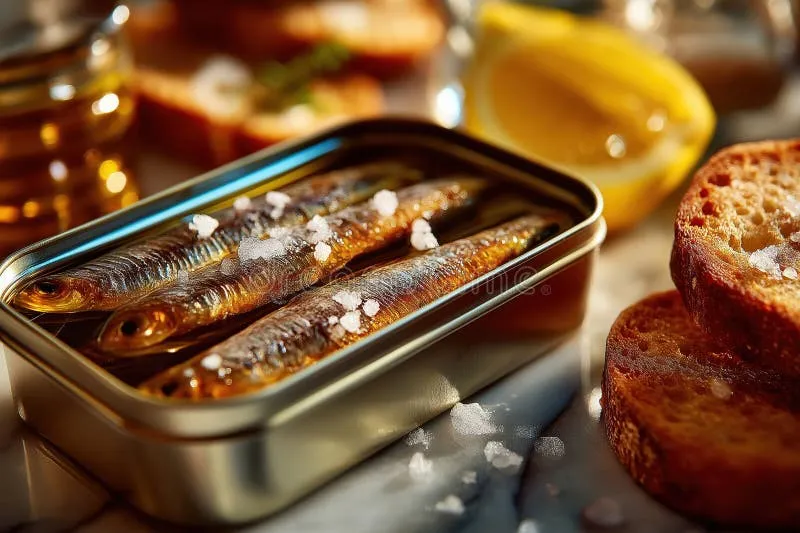
Photo: salt-packed anchovies lemons and olive oil on rustic Italian kitchen table, via thumbs.dreamstime.com
Ask a Ligurian cook what defines the region's food and you'll get a long pause — not because they don't know, but because the answer seems too obvious to say out loud. Then, almost invariably: the anchovies, the lemons, and the oil.
Ligurian cuisine is often called cucina povera, cooking of the poor, and there's truth in that. This is a steep, rocky coastline where cattle can't graze and wheat fields won't fit. So the people of the bay built a kitchen out of what the terraces and the sea gave them. Those three ingredients show up in nearly everything, from the famous trofie al pesto to the simplest grilled fish. Here's what makes each one special — and how to bring them into an American kitchen without a plane ticket.
The Anchovy: Monterosso's Salty Gold
The anchovies of Monterosso al Mare, in the Cinque Terre, are acciughe di Monterosso — a protected Slow Food presidio. Local fishers have caught them for centuries using a traditional net called a menaica, which has a wide mesh designed to catch only the largest fish, letting the young ones escape. The best are packed by hand into glass jars or wooden barrels with coarse sea salt and a bay leaf, where they cure for months until they turn deep amber and almost buttery.
"The menaica is fishing with respect," third-generation producer Marco Delfino told us on the Monterosso waterfront. "We take the big ones and leave the sea the rest. That's why the anchovy tastes clean, not just salty."
Cook with it: Quality salt-packed or oil-packed anchovies aren't a pizza topping — they're a seasoning. Melt two fillets into warm olive oil with garlic for a sauce for pasta or roasted vegetables, or make acciugata: whisk anchovies, lemon juice, and olive oil into a pale emulsion for dipping raw vegetables, the classic Ligurian verdure in accompanimento.
US substitute: Salt-packed anchovies (Ortiz and Agostino Recca brands are widely available) are worth the splurge; good oil-packed fillets from Spain or Sicily work in a pinch. Rinse salt-packed ones briefly before using.
The Lemon: Sanremo's Perfumed Heirloom
Liguria's lemons are smaller, rougher-skinned, and far more aromatic than the Eureka lemons in your supermarket. The most celebrated is the SFere di Sanremo — spherical lemons from the flower Riviera around Sanremo, prized for centuries and once shipped across Europe by the ton. In the 19th century, Sanremo's lemon gardens were so famous that aristocrats wintered there just to breathe the air among the trees.
Grower Elena Ricci, whose family tends terraces above Sanremo, explains the difference this way: "A commercial lemon gives you acidity. Ours gives you perfume. You zest one over fish and the whole kitchen changes."
That thick, fragrant zest is the point — it's the backbone of Ligurian limoncello, of lemon-laced focaccia, and of the simple treatment of fresh sardines and anchovies.
Cook with it: Use a microplane and zest generously — the zest, not the juice, carries the aroma. Try a classic: pesce al limone, white fish baked with lemon slices, a thread of olive oil, and parsley.
US substitute: Meyer lemons, with their floral character, are the closest widely available stand-in. In a real bind, add a few drops of good lemon extract to the zest of a standard lemon to boost the aroma.
The Olive Oil: The Gentle Press of Taggia
Ligurian olive oil is different from the peppery Tuscan oils Americans often know. It's pressed almost entirely from the small olive di Taggia, a cultivar cured and pressed along the Riviera dei Fiori for over a thousand years. Because olives can't be machine-harvested on Liguria's steep terraces, they're often gathered with hand nets — and because the region sits in a mild microclimate, the oil comes out soft, golden, and gently sweet, with notes of almond and fresh grass rather than a chili-pepper burn.
"Tuscan oil shouts. Ours whispers," is how miller Andrea Boccardo put it when we visited his frantoio outside Taggia. "It's a finishing oil, a dressing oil — you never want it to cover the fish or the basil."
That delicacy is why it's the only oil for authentic pesto alla Genovese, and why Ligurians drizzle it over everything from focaccia to cheese.
Cook with it: Use it raw or for low-heat finishing — on soups, beans, grilled bread. For pesto, blend basil, pine nuts (or walnuts, the cheaper Ligurian way), garlic, Parmesan, and a slow stream of oil.
US substitute: Look for a mild, buttery Mediterranean or California oil labeled "delicate" or "late harvest." In a pinch, cut a robust oil with a neutral one to soften the bite.
The Trinity in One Dish
Want to taste all three working together? Make the simplest thing on any Ligurian menu: roasted or grilled white fish, dressed while hot with raw olive oil, a heavy hand of lemon zest, and two anchovy fillets melted into the dressing. Salt to taste. It takes ten minutes and tastes like the bay at dusk — which is, more or less, the whole philosophy of this coast on a plate.